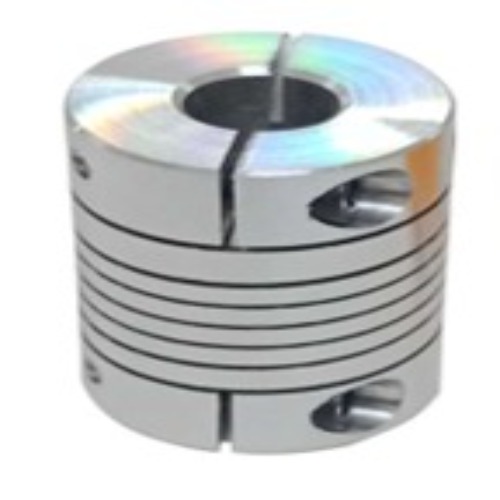
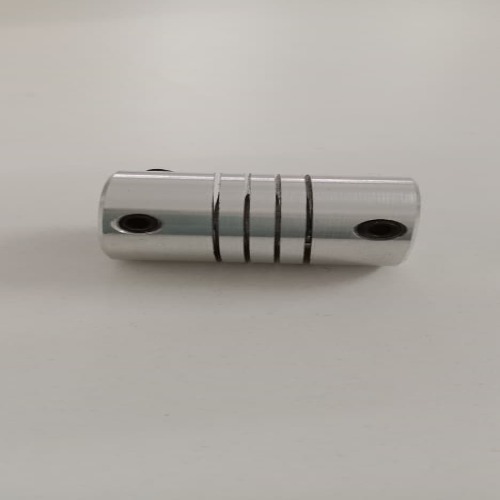
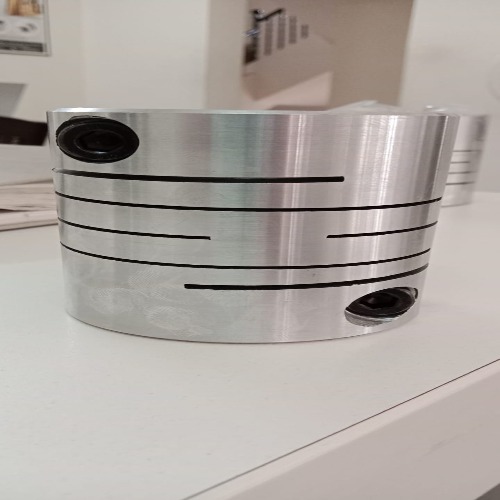
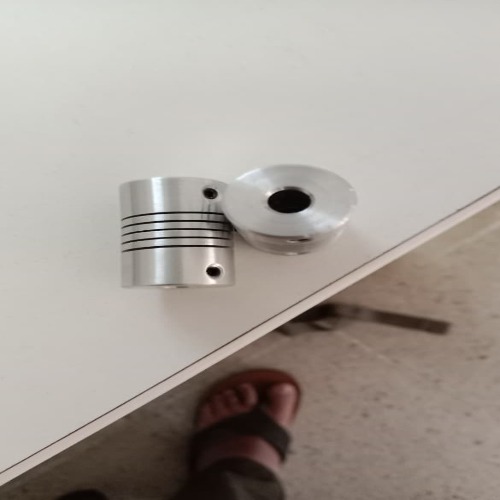
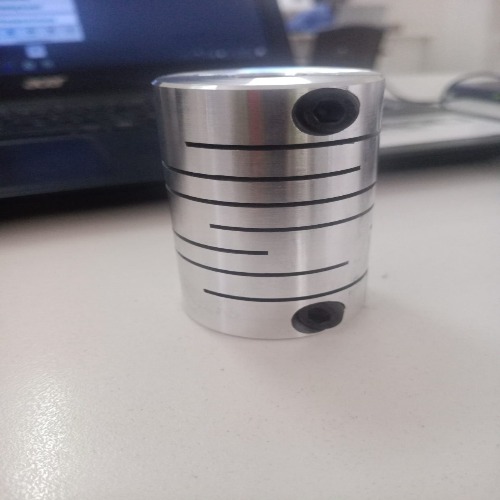
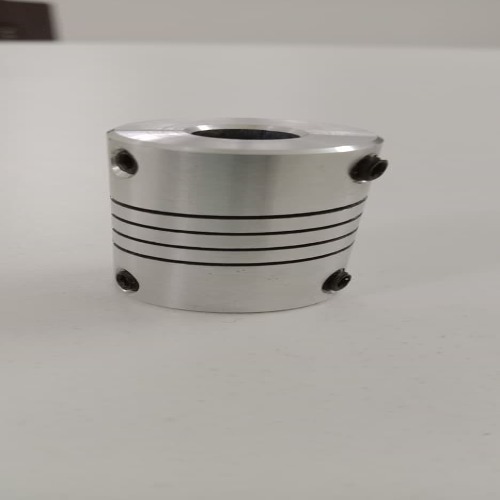
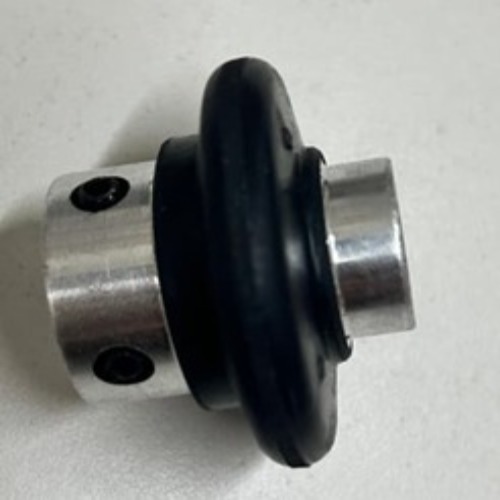
Aluminum flexible coupling | amastone An aluminum flexible coupling is a lightweight mechanical component, typically made from high-grade aluminum like HE-30, that connects two shafts to transmit torque while accommodating slight misalignments. It uses a rigid helical structure to transmit power, acting as a single-piece unit that allows for both angular and parallel shaft movement. Common specifications include varying bore diameters (e.g., 6mm x 6mm) for matching shafts, and they are commonly found in CNC machines and 3D printers. Description Purpose: An aluminum flexible coupling's primary function is to transmit rotational power (torque) from a driving shaft to a driven shaft. Material: It is made from a high-grade aluminum alloy, such as HE-30, which provides a balance of strength and low weight. Design: The coupling typically has a helical, or "spring-like" design, allowing it to flex and bend to absorb shaft misalignment without losing power transmission. Attachment: It is secured to the shafts using set screws, which are tightened with an Allen key. Flexibility: Unlike rigid couplings, flexible types can compensate for small angular, parallel, or even axial misalignments between the shafts
Usage
CNC Machines: For connecting motors to shafts and other components.
Usage & Applications
Industrial
Warranty
1 year
Display Type
Nil
Features
Good Quality
Material
ALUMINIUM , STAINLESS STEEL
ALUMINIUM FLEXIBLE COUPLING Trade Information
Minimum Order Quantity
1 Number
Supply Ability
100 Per Month
Delivery Time
1 Week
ALUMINIUM FLEXIBLE COUPLING About
An aluminum flexible coupling isa lightweight mechanical component, typically made from high-grade aluminum like HE-30, that connects two shafts to transmit torque while accommodating slight misalignments. It uses a rigid helical structure to transmit power, acting as a single-piece unit that allows for both angular and parallel shaft movement. Common specifications include varying bore diameters (e.g., 6mm x 6mm) for matching shafts, and they are commonly found in CNC machines and 3D printers.
An aluminum flexible coupling isa lightweight mechanical component, typically made from high-grade aluminum like HE-30, that connects two shafts to transmit torque while accommodating slight misalignments. It uses a rigid helical structure to transmit power, acting as a single-piece unit that allows for both angular and parallel shaft movement. Common specifications include varying bore diameters (e.g., 6mm x 6mm) for matching shafts, and they are commonly found in CNC machines and 3D printers.
Description
Purpose:An aluminum flexible couplings primary function is to transmit rotational power (torque) from a driving shaft to a driven shaft.
Material:It is made from a high-grade aluminum alloy, such as HE-30, which provides a balance of strength and low weight.
Design:The coupling typically has a helical, or "spring-like" design, allowing it to flex and bend to absorb shaft misalignment without losing power transmission.
Attachment:It is secured to the shafts using set screws, which are tightened with an Allen key.
Flexibility:Unlike rigid couplings, flexible types can compensate for small angular, parallel, or even axial misalignments between the shafts
Versatile and Durable Design
The aluminium flexible coupling features a helical cut, granting remarkable flexibility to accommodate minor misalignments. Its use of strong yet lightweight materials ensures long-lasting performance while minimizing rotational inertia. This design makes it an excellent choice for dynamic industrial applications demanding precision and reliability.
Custom Fit for Industrial Applications
Available in various bore diameters, the aluminium flexible coupling can be matched precisely to your machinerys shafts. It is commonly used in CNC machines and 3D printers, meeting the rigorous demands of the manufacturing and automation sectors across India. Its robust construction supports smooth power transmission and equipment longevity.
Ease of Installation and Maintenance
Installation of the aluminium flexible coupling is straightforward, often requiring just standard hand tools. Its one-piece structure eliminates the need for frequent maintenance, and its reliable design minimizes the risk of downtime, making it a practical and efficient choice for industrial environments.
FAQs of ALUMINIUM FLEXIBLE COUPLING:
Q: How does an aluminium flexible coupling function in machinery?
A: An aluminium flexible coupling connects two rotating shafts, transmitting torque while compensating for angular and parallel misalignments. Its helical structure allows for slight shaft movement, ensuring smooth, efficient power transfer without stressing other components.
Q: What are the primary uses of aluminium flexible couplings?
A: These couplings are widely used in CNC machines, 3D printers, and other industrial equipment where precise motor-to-shaft connections are essential. They help absorb vibration and correct minor misalignments, improving overall machine reliability.
Q: When should I choose an aluminium flexible coupling over other materials?
A: Aluminium flexible couplings are ideal when lightweight construction, corrosion resistance, and high precision are priorities. They are especially suited for applications requiring frequent start-stop cycles or reduced rotational inertia.
Q: Where are aluminium flexible couplings commonly installed?
A: They are typically found in the drive systems of CNC machines, automation setups, and 3D printers. Manufacturers and suppliers across India provide various sizes for different industrial applications.
Q: What is the process for installing an aluminium flexible coupling?
A: Installation is usually simple: align the shafts, match the appropriate bore size, secure the coupling with the provided fasteners, and verify the connection. No special tools are required, making setup quick and efficient.
Q: What benefits does an aluminium flexible coupling offer industrial users?
A: Industrial users benefit from reduced maintenance, increased equipment life, and smoother operation. The couplings flexibility minimizes vibration and compensates for shaft misalignments, preventing premature wear on connected components.
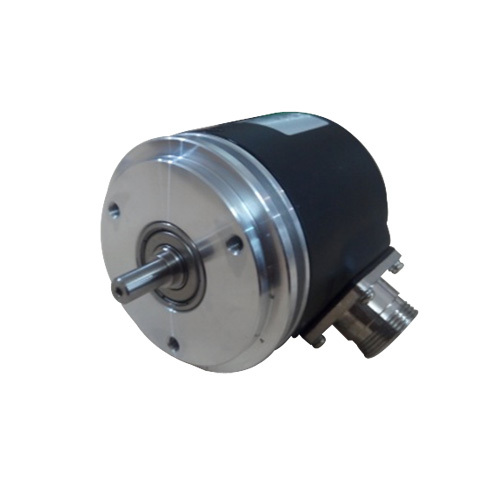
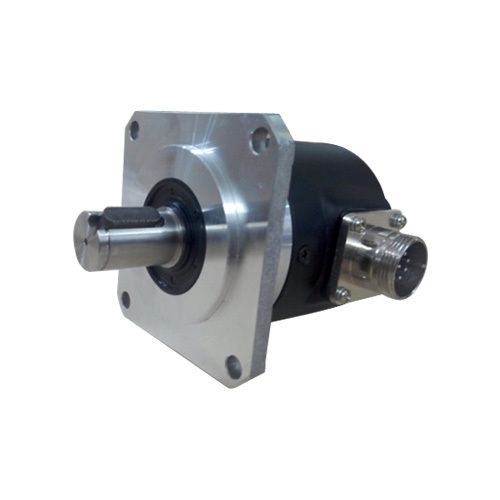
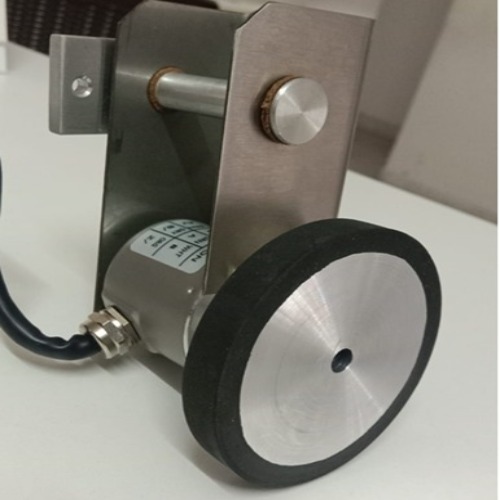
Usage : Linear Measurement: It converts linear motion (e.g., on conveyor belts, material sheets) into precise electrical pulses for length and speed measurement.
Material : Encoder SpringLoaded Bracket with a measuring wheel, a device primarily used for linear measurement in various industrial and automation applications.
Function : Versatile Mounting: These brackets allow for adjustable mounting of the encoder and measuring wheel in various orientations, even on vertical surfaces






 Get Latest Price

 Send Inquiry
 Send Inquiry
 Send SMS